Posts

Public Policy 9

Image
Education is another important area of public policy. People have long argued the education system is a crucial component of maintaining a class system. Simply put, the elites get educated the poor do not, for the most part. The sociologist Pierre Bourdieu coined the term "cultural capital" to speak of how education is used as a form of power. Cultural capital can be defined as: " the collection of symbolic elements such as skills, tastes, posture, clothing, mannerisms, material belongings, credentials, etc. that one acquires through being part of a particular social class." From this point of view, schools and  universities then serve to instill this collection of symbolic elements in students. Again, those who do not possess, learn, or appropriate these elements are at a significant  disadvantage in society. Cultural capital instills a certain kind of "habitus" (another of Bourdieu's terms), or basically certain kinds of social habits. Acquiring and...

Public Policy 8

Image
As mentioned in previous classes, the mandatory spending of the federal government is far more than discretionary spending in the annual budget, making up almost 2/3 of all federal spending. Mandatory spending refers to spending on programs that are set at pre-determined levels that are, to some extent, outside the control of members of Congress and the executive branch. Since the budget is highly politicized, I think it is clear, mandatory spending is meant to protect these programs from the political maneuverings so common in government. When talking about mandatory spending the most important programs are Social Security which was established back in 1935, and Medicare and Medicaid, both created in 1965. Given the shift in priorities in government since the 1980s, it is also quite clear that all these programs would have been defunded a long time ago had they been subject to the normal budget process.  We already covered Medicare and Medicaid somewhat last class, so this ...

Public Policy 7

Image
One of the most controversial issues in the U.S. today is the debate over healthcare. Should the U.S. adopt some system of public healthcare, like a single payer system, where the government pays for healthcare costs, or maintain a private system of healthcare made up of insurance companies and other industries like pharmaceuticals and hospitals?  Honestly, I do not think the debate is as complex as people act like it is, the main challenge is sorting through the disinformation surrounding this issue. Many argue that a single payer, or even a fully nationalized system, where the government actually pays doctors, nurses, and other healthcare professionals, is too expensive. Yet, these critics have a hard time explaining why every other rich nation (and some not so rich or middle income nations) in the world has created at least a single payer system, some have gone even further in nationalizing all health care services. Frankly, the burden of proof is on these critics to explain why...

Public Policy 6

Image
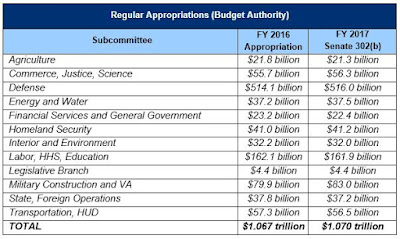
In this part of the class we will look more closely at specific areas of public policy, beginning with the budget.   There is a famous saying that "all budgets are moral documents," meaning they reflect the values of society, or the government which is supposed to represent the people.  The federal budget refers to the expenses of the government every year on various programs and activities. The "power over the purse", or the power to control spending, and the power to tax, is given to the Congress in the U.S. Constitution, and does not specify a role for the President.  However,  the budget process is overseen by the President and the Congress, with special agencies like the Office of Management and Budget, the Government  Accountability Office, and the Congressional Budget Office that provide oversight and research assistance for the budget.  According to the National Priorities Project, the process of making the federal budget can be broken down in...

Public Policy 5

Image
This class will focus on how ideas influence institutions. Institutions are important in understanding public policy as they set the rules for how policy is made. Institutions are basically what hold societies together. There are political institutions, including: the legislatures where laws are made, government bureaucracies, the courts and legal system. Also, the military which is either another type of political institution, or a separate institution altogether. Besides politics, you have large economic institutions like corporations, smaller businesses, and labor unions which represent workers. In traditional societies religion played a major role in social order, but in modern societies this role is now largely played by the mass media, most of which are also privately run corporations like the movie and television industries, publishing, the music industry, etc. Collectively, these institutions all help maintain social order, and serve as conduits for the exercise of power. Mos...

Public Policy 4

Image
The book by Béland and Cox is about how ideas shape policy. The first chapters focuses on arguments  for why ideas matter. Ideas are important in politics because they help define what a person's interests are. You cannot just assume people are like robots who can automatically calculate what their best interests are. Most of the time, people are influenced by the dominant cultural values in which they find themselves, for better or worse. Many times, people do things which are not in their best interest, and this is due to the influence of ideas and culture. For example, Jal Mehta says: Consider what it would mean to assert that ideas did  not  matter. (To be precise, I define an idea to “matter” when it (a) shapes people’s actions and (b) is not reducible to some other nonideational force.) At the broadest level, asserting that ideas do not matter would mean that shifting ideals about science, religion, democracy, slavery, colonization, gender, race, and homos...